
Building Real-World Evidence Infrastructure to Improve Health and Healthcare in the United States: Part II—How Coordinated Registry Networks Operate Like Systemic Coordinated Inter-Organizational Networks
DOI:
https://doi.org/10.25259/IJTMRPH_75_2024Keywords:
- Evidence-Based Medicine,
- Learning Social Theory,
- Public Health,
- Public Reporting of Healthcare Data,
- Quality Improvement,
- Registries
Abstract
Background and Objective: Coordinated Registry Networks (CRNs) are networks of healthcare partners that create and utilize information from clinical society registries and other sources to drive evidence-based improvements in healthcare. In Part I of this three-part series, we introduced the systemic coordinated interorganizational networks (SCIONs) theory, which is proposed as a unique mode of societal coordination that fosters trust, cooperation, and adaptability among partner organizations to address complex societal problems, including healthcare. In this article, we analyze how CRNs function like SCIONs to better understand how CRNs can promote innovation to improve outcomes, quality, and efficiency.
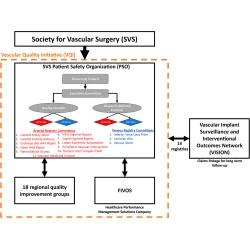
Methods: The SCIONs theory is used to describe the structure and functions of CRNs and to consider how they might be optimized in practice. We apply the SCIONs theory to an extended case study of the Society for Vascular Surgery (SVS) Vascular Quality Initiative (VQI) to describe the structure and functions of this CRN.
Results: The criteria to identify SCIONs—characteristics, modes of coordination, and performance evaluation— are applied to the VQI as CRN (and to the VQI as an extended case study). CRNs may drive radical innovation in quality improvement, research, regulatory decision-making, and medical product development. The consequences of these innovations in vascular surgery have been measured by reduced patient stays, reduced barriers in care access, and improved care quality metrics. A partnership between the SVS VQI and the Medical Device Epidemiology Network further expanded VQI’s capabilities and integrated Medicare data for a robust evaluation of patient outcomes. Key factors making innovation possible include regional sub-networks, collaborative stakeholder relationships, and a dedicated network-coordinating organization that provides technical expertise, leadership, and data quality assurance for effective collaboration.
Conclusion and Implications for Translation: The description of the VQI as a SCION offers a generalizable model for the CRN as real-world data collection and analysis that has transformed healthcare delivery and improved patient outcomes at scale. The CRN model is proposed for development broadly across medical and surgical specialties in the US as well as primary care.
Downloads
Most read articles by the same author(s)
- Osman Nuri Yogurtcu, Laura E. Gressler, Jens Eldrup-Jorgensen, Kashif Haqqi, Colin Shepard, Orestis A. Panagiotou, Santiago J. Molina, Philip P. Goodney, Ali B. Abbasi, Brian S. Anderson, Wilbur C. Hadden, James E. Tcheng, Julia Skapik, Gregory Pappas, Building Real-World Evidence Infrastructure to Improve Health and Healthcare in the United States: Part I—Coordinated Registry Networks and Systemic Coordinated Inter-Organizational Networks , International Journal of Translational Medical Research and Public Health: Vol. 9 No. Special Collection (2025): The International Journal of Translational Medical Research and Public Health (IJTMRPH)
- Osman Nuri Yogurtcu, Laura E Gressler, Jens Eldrup-Jorgensen, Kashif Haqqi, Colin Shepard, Orestis A Panagiotou, Santiago J Molina, Philip P Goodney, Ali B Abbasi, Brian S Anderson, Wilbur C Hadden, James E Tcheng, Julia Skapik, Gregory Pappas, Building Real-World Evidence Infrastructure to Improve Health and Healthcare in the United States: Part III— Questions for Translational Science and Action Theory , International Journal of Translational Medical Research and Public Health: Vol. 9 No. Special Collection (2025): The International Journal of Translational Medical Research and Public Health (IJTMRPH)
- Gregory Pappas, Introduction to Special Collection: Building the Real-World Evidence Infrastructure to Accelerate Innovation and Improve Outcomes in Healthcare , International Journal of Translational Medical Research and Public Health: Vol. 9 No. Special Collection (2025): The International Journal of Translational Medical Research and Public Health (IJTMRPH)
Similar Articles
- Ashok Bahadur Varma, Can the Internal Nasal Valves Method Be a Game Changer for Preventing Respiratory Tract Infections? , Vol. 8 No. Continuous (2024): The International Journal of Translational Medical Research and Public Health (IJTMRPH)
- Laila Al Afnan, Hunger in America: Examining the Far–Reaching Effects of Food Insecurity in the United States of America , Vol. 8 No. Continuous (2024): The International Journal of Translational Medical Research and Public Health (IJTMRPH)
- Vinod K Ramani, Radheshyam Naik, A Narrative Review of the Pathophysiology of Mucormycosis Infection Among COVID-19 Patients in India: Epidemiology and Clinical Implications , Vol. 6 No. 1 (2022): The International Journal of Translational Medical Research and Public Health (IJTMRPH)
- Maureen Atieno Adoyo, Yeri M Kombe, Gestational Diabetes Mellitus and Associated Health Risk Outcomes in Mothers and Neonates , Vol. 4 No. 1 (2020): The International Journal of Translational Medical Research and Public Health (IJTMRPH)
- Anushka Banerjee, Abhijit G. Banerjee, Chronic Inflammation in Polycystic Ovarian Syndrome: Examining Biomarker–Driven Control Strategies to Reduce Population–Level Disease Burden , Vol. 8 No. Continuous (2024): The International Journal of Translational Medical Research and Public Health (IJTMRPH)
- Deepa Dongarwar, Karla Moriel, Kobby A Wiafe, Hamisu M Salihu, Sex and Age-Based Differences in Adult Acute Myeloid Leukemia Hospitalizations in the United States, 2009-2018 , Vol. 6 No. 1 (2022): The International Journal of Translational Medical Research and Public Health (IJTMRPH)
- Amani A Alrehaili, Lumbar Puncture in Saudi Arabia: Knowledge, Awareness, Acceptance and its Refusal Among Health Professionals , Vol. 4 No. 1 (2020): The International Journal of Translational Medical Research and Public Health (IJTMRPH)
- Arumugam Elangovan, Vasna Joshua, Aridoss Santhakumar, Balasubramanian Ganesh, Nagaraj Jaganathasamy, Joseph K David, Malathi Mathiyazhakan, Manikandan Natesan, VM Padmapriya, Pradeep Kumar, Identifying Risk Factors and Spatial Clustering of HIV Infection Among Female Sex Workers in India , Vol. 5 No. 1 (2021): The International Journal of Translational Medical Research and Public Health (IJTMRPH)
- Marilyn Murrillo, On Utilizing Artificial Intelligence to Impact Healthcare in Low-Income Countries , Vol. 8 No. Continuous (2024): The International Journal of Translational Medical Research and Public Health (IJTMRPH)
- Christopher S Oyamienlen, Charles A Adisa, Ikechukwu N. S Dozie, Evangeline T Oparaocha, Angelica A Anele, Kingsley C Anochiwa, Body Mass Index and Breast Cancer Risks Among Igbo Women in Imo and Abia States, Nigeria: A Case Control Study , Vol. 3 No. 1 (2019): The International Journal of Translational Medical Research and Public Health (IJTMRPH)
<< < 8 9 10 11 12 13 14 15 > >>
You may also start an advanced similarity search for this article.
Published
How to Cite
Issue
Section
License
Copyright © 2025 Osman Nuri Yogurtcu, Laura E. Gressler, Jens Eldrup-Jorgensen, Kashif Haqqi, Colin Shepard, Orestis A. Panagiotou, Santiago J. Molina, Philip P. Goodney, Ali B. Abbasi, Brian S. Anderson, Wilbur C. Hadden, James E. Tcheng, Julia Skapik, Gregory Pappas. Published by Global Health and Education Projects, Inc., USA.

This is an open-access article distributed under the terms of the Creative Commons Attribution-NonCommercial-ShareAlike 4.0 International License , which permits others to remix, transform, and build upon the work non-commercially, provided the original author is credited and the new creations are licensed under the same terms.



 .
.

