
Sexually Transmitted Infections in Pre-Exposure Prophylaxis Patients
DOI:
https://doi.org/10.21106/ijtmrph.461Keywords:
- HIV,
- Men who have Sex with Men (MSM),
- Pre-exposure Prophylaxis (PrEP),
- STI
Abstract
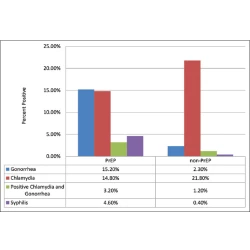
Background and Objective: Pre-exposure prophylaxis (PrEP) effectively prevents the spread of the human immunodeficiency virus (HIV). HIV is a disease primarily contracted by men who have sex with men or the sharing of needles, syringes, and other drug injection equipment. However, there are some disparities over the thought that PrEP patients have a disproportionate incidence of sexually transmitted infections (STIs) compared with non-PrEP patients. This study aims to clarify the disparity and identify if PrEP patients have a higher incidence of STIs. Methods: A survey of 143 respondents was conducted on STI incidence, risk factors, and abstinence from May 13, 2022, to June 20, 2022. The results were analyzed in Statistical Package for the Social Sciences (SPSS V28.0.0.0). SPSS was used to analyze the descriptive statistics associated with STI data obtained from the Naval Medical Readiness and Training Command, Camp Lejeune, Community Health Clinic Patient and Laboratory Tracker. Results: This study found a higher incidence of STIs among PrEP patients than non-PrEP patients and a statistical significance (p = 0.010) between the number of partners a person had sex with over the past year and the lifetime incidence of STIs. Portions of the data in the linear regression were used to calculate the significance and can be used as a predictor of STIs based on the number of partners a person has. This can help patients within this community understand their actual risk of contracting an STI based on a potential risk factor. Conclusion and Implications for Translation: This study found a higher incidence of STIs among PrEP patients than non-PrEP patients. Additionally, the study can help public health professionals understand the risks associated with military patients who take PrEP and target specific risk factors that influence the disparity in the incidence of STIs. Future studies may use survey data from this study to understand the implications of other risk factors and their association with STIs. Public health professionals can also use these data to develop a predictive index for many risk factors. A predictive index on STI risk is an extremely valuable tool as it allows users to view their risk of obtaining an STI.
Downloads
Similar Articles
- Ogechukwu B Aribodor, Chinyelu A Ekwunife, Olufemi S Sam-Wobo, Dennis N Aribodor, Risk Factors and Socio-demographic Determinants of Intestinal Helminthiasis among Children in Schools that Implemented the Homegrown School Feeding Program in Ekwulobia, Anambra State, Southeast Nigeria , Vol. 2 No. 1 (2018): The International Journal of Translational Medical Research and Public Health (IJTMRPH)
- Stephenson Babatunde Ojeifo, Seun Stephen Anjorin, Birth-Weight and Risk of Breast Cancer: A Systematic Review Study , Vol. 2 No. 1 (2018): The International Journal of Translational Medical Research and Public Health (IJTMRPH)
- Ajoke Olutola Adagbada, Jacob Itopa Yisau, Toun Wuraoluwa Fesobi, Muinah Adenike Fowora, Tajudeen Akanji Bamidele, Toyosi Yekeen Raheem, Adenike Shola Aiyedogbon, Ibilola Omolopo, Abraham Ajayi, Olufemi Samuel Amoo, Chinonso Ikpo, Grace Abosede Akintunde, Bamidele Abiodun Iwalokun, Stella Ifeanyi Smith, Babatunde Lawal Salako, Community-acquired Klebsiella pneumoniae – Its Virulence and Antimicrobial Resistance Genes Complement in Participants Presenting for COVID-19 Testing in Lagos State, Nigeria , Vol. 10 (2026): The International Journal of Translational Medical Research and Public Health (IJTMRPH)
- Amina P Alio, Linxi Liu, Kelly Thevenet-Morrison, Michelle R Rubado, Hugh F Crean, Peter J Veazie, Christopher L Seplaki, Ann Dozier, Association of Voluntary Legal Paternity and Breastfeeding Duration and Exclusivity in a Sample of Mothers in NewYork State, United States , Vol. 5 No. 2 (2021): The International Journal of Translational Medical Research and Public Health (IJTMRPH)
- Mohamed Rida Tagajdid, Safae Elkochri, Hicham Elannaz, Rachid Abi, Idriss Lahlou Amine, Epidemiological, Clinical and Virological Characteristics of Patients with Hepatitis C in Morocco , Vol. 4 No. 1 (2020): The International Journal of Translational Medical Research and Public Health (IJTMRPH)
- Omar M Young, Jackyln C Fuller, Henry W Lewis III, An Innovative Approach to E-mentorship for Black Applicants to Graduate Medical Education (GME) Programs , Vol. 8 No. Continuous (2024): The International Journal of Translational Medical Research and Public Health (IJTMRPH)
- Oluwatosin Olateju, Ilona Argirion, Melanie Bolden, Stephanie Klapper, Jonas Nguh, Chidubem Egboluche, Addressing Health Disparities in Maryland Communities: Insights from a Public Health State Affiliate and Strategic Advocacy Recommendations , Vol. 9 No. Continuous (2025): The International Journal of Translational Medical Research and Public Health (IJTMRPH)
- Gopal K. Singh, Hyunjung Lee, Lyoung Hee Kim, Romuladus E Azuine, State and Metropolitan Area Disparities in Long COVID-19 and Related Symptoms among US Adults, June-October 2022 , Vol. 7 No. 2 (2023): The International Journal of Translational Medical Research and Public Health (IJTMRPH)
- Albert Apotele Nyaaba, Edward Kwabena Ameyaw, Matthew Ayamga, Beyond the COVID-19 Vaccine: The “Epidemic” of Violence in Ghana and Strategies to Keep Women and Children Safe from Gender-Based Violence , Vol. 6 No. 1 (2022): The International Journal of Translational Medical Research and Public Health (IJTMRPH)
- Bright Opoku Ahinkorah, Abdul-Aziz Seidu, Eugene Budu, Ebenezer Kwesi Armah-Ansah, Ebenezer Agbaglo, Collins Adu, Edward Kwabena Ameyaw, Sanni Yaya, Factors Associated with Utilization of Postnatal Care Services in Mali, West Africa Bright Opoku Ahin , Vol. 5 No. 1 (2021): The International Journal of Translational Medical Research and Public Health (IJTMRPH)
<< < 1 2 3 4 5 6 7 8 9 10 > >>
You may also start an advanced similarity search for this article.
Published
How to Cite
Issue
Section
License
Copyright © 2023 Nicholas A Sleeman, Carol Hoban, Samer Koutoubi. Published by Global Health and Education Projects, Inc., USA.

This is an open-access article distributed under the terms of the Creative Commons Attribution-NonCommercial-ShareAlike 4.0 International License , which permits others to remix, transform, and build upon the work non-commercially, provided the original author is credited and the new creations are licensed under the same terms.



 .
.

