
Marked Inequalities in COVID-19 Vaccination by Racial/Ethnic, Socioeconomic, Geographic, and Health Characteristics, United States, January 6 – February 15, 2021
DOI:
https://doi.org/10.21106/ijtmrph.357Keywords:
- COVID-19,
- Pandemic,
- Vaccination,
- Disparities,
- Race/Ethnicity,
- Socioeconomic Status,
- Vaccine Equity,
- Coronavirus
Abstract
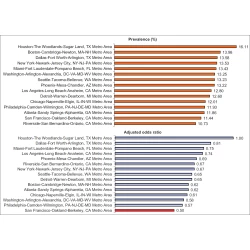
Background: The COVID-19 pandemic has had a substantial adverse impact on the health and wellbeing of populations in the United States (US) and globally. Since the availability of COVID-19 vaccines in December 2020, efforts have been underway to vaccinate priority populations who are at increased risks of COVID-19 infections, morbidity, and mortality, but rigorous and analytical national data on vaccination rates are lacking. Using the latest nationally representative data, we examine disparities in COVID-19 vaccination among US adults aged 18 years and older by a wide range of social determinants. Methods: Using three consecutive rounds of the US Census Bureau’s Household Pulse Survey from January 6 to February 15, 2021 (N=224,458), disparities in vaccination rates by race/ethnicity, socioeconomic status, health insurance, health status, and metropolitan area were modeled by multivariate logistic regression. Results: An estimated 33.6 million or 13.6% of US adults received COVID-19 vaccination. Vaccination rates varied 5-fold across the age range, from a low of 5.8% for adults aged 18-24 to 19.1% for those aged 65-74, and 29.0% for those aged ≥75 years. Males, non-Hispanic Blacks, Hispanics, divorced/separated and single individuals, those with lower education and household income levels, renters, not-employed individuals, the uninsured, and individuals with higher depression levels reported significantly lower rates of vaccination. Controlling for covariates, non-Hispanic Blacks had 11% lower odds and Asians had 50% higher odds of receiving vaccination than non-Hispanic Whites. Adults with less than a high school education had 64% lower adjusted odds of receiving vaccination than those with a Master’s degree. Adults with an annual income of <$25,000 had 33% lower adjusted odds of vaccination than those with a ≥$200,000. Vaccination rates ranged from 10.7% in Riverside-San Bernardino, California to 16.1% in Houston, Texas. Conclusion and Implications for Translation: Ethnic minorities, socioeconomically-disadvantaged individuals, uninsured adults, and those with serious depression reported significantly lower vaccination rates. Equitable vaccination coverage is critical to reducing inequities in COVID-19 health outcomes.
Downloads
Most read articles by the same author(s)
- Mehrete Girmay, Gopal K Singh, Social Isolation, Loneliness, and Mental and Emotional Well-being among International Students in the United States , International Journal of Translational Medical Research and Public Health: Vol. 3 No. 2 (2019): The International Journal of Translational Medical Research and Public Health (IJTMRPH)
- Hyunjung Lee, Gopal K Singh, Racial and Ethnic Disparities in the Mental Health Impact of the COVID-19 Pandemic in the United States: Analysis of 3 Million Americans from the National Health Interview Survey and Household Pulse Survey , International Journal of Translational Medical Research and Public Health: Vol. 6 No. 2 (2022): The International Journal of Translational Medical Research and Public Health (IJTMRPH)
- Gopal K Singh, Shanita D Williams, Hyunjung Lee, Elijah K Martin, Michelle Allender, Christine T Ramey, Trends in Physical and Mental Health, Mortality, Life Expectancy, and Social Inequalities Among American Indians and Alaska Natives, 1990-2019 , International Journal of Translational Medical Research and Public Health: Vol. 5 No. 2 (2021): The International Journal of Translational Medical Research and Public Health (IJTMRPH)
- Romuladus E Azuine, Gopal K Singh, Shanita D Williams, Evangeline T Oparaocha, Shiv C Mathur, Translating Public and Population Health Research into Policy and Actions: The International Journal of Translational Medical Research and Public Health (IJTMRPH) , International Journal of Translational Medical Research and Public Health: Vol. 1 No. 1 (2017): The International Journal of Translational Medical Research and Public Health (IJTMRPH)
- Gopal K. Singh, Hyunjung Lee, Romuladus E. Azuine, Trends and Socioeconomic, Demographic, and Behavioral Determinants of Kidney Disease Prevalence among African Americans in the United States, 1997–2021 , International Journal of Translational Medical Research and Public Health: Vol. 9 No. Continuous (2025): The International Journal of Translational Medical Research and Public Health (IJTMRPH)
- Gopal K. Singh, Hyunjung Lee, Lyoung Hee Kim, Gem P Daus, Promoting Health Literacy as an Important Initiative in Reducing Health Disparities and Advancing Health Equity , International Journal of Translational Medical Research and Public Health: Vol. 8 No. Continuous (2024): The International Journal of Translational Medical Research and Public Health (IJTMRPH)
- Gopal K Singh, Mehrete Girmay, Michelle Allender, Christine T Ramey, Digital Divide: Marked Disparities in Computer and Broadband Internet Use and Associated Health Inequalities in the United States , International Journal of Translational Medical Research and Public Health: Vol. 4 No. 1 (2020): The International Journal of Translational Medical Research and Public Health (IJTMRPH)
- Gopal K Singh, Hyunjung Lee, Romuladus E Azuine, Food Insecurity among Lesbian, Gay, Bisexual, and Transgender Adults During the COVID-19 Pandemic in the United States, July-October 2021 , International Journal of Translational Medical Research and Public Health: Vol. 6 No. 1 (2022): The International Journal of Translational Medical Research and Public Health (IJTMRPH)
- Gopal K. Singh, Lyoung Hee Kim, Hyunjung Lee, Romuladus E Azuine, Disparities in Prevalence of COVID-19, Long COVID, Disease Severity, and Mental Health Outcomes among US Adults by Industrial Sector of Employment, September-November 2022 , International Journal of Translational Medical Research and Public Health: Vol. 7 No. 2 (2023): The International Journal of Translational Medical Research and Public Health (IJTMRPH)
- Hyunjung Lee, Gopal K Singh, Marked Disparities in Cardiovascular Disease Mortality by Levels of Happiness and Life Satisfaction in the United States , International Journal of Translational Medical Research and Public Health: Vol. 4 No. 2 (2020): The International Journal of Translational Medical Research and Public Health (IJTMRPH)
Similar Articles
- María G Ramírez-Rojas, María G Freyermuth-Enciso, María B Duarte-Gómez, Defragmenting the Health Care System in Mexico: Universal Access for Obstetric Emergencies , Vol. 4 No. 1 (2020): The International Journal of Translational Medical Research and Public Health (IJTMRPH)
- Romuladus E Azuine, Gopal K Singh, Shanita D Williams, Evangeline T Oparaocha, Shiv C Mathur, Translating Public and Population Health Research into Policy and Actions: The International Journal of Translational Medical Research and Public Health (IJTMRPH) , Vol. 1 No. 1 (2017): The International Journal of Translational Medical Research and Public Health (IJTMRPH)
- Ahmad Bashir Umar, Mohammed Kabir Saleh, Yahuza Mansur Adamu, Sadiq Hassan, Muktar Hassan Aliyu, Anas Ismail, Ocular Health Complications Among People Living with HIV/AIDS in Nigeria: Leveraging Doppler Ultrasonography to Identify and Manage Risk Factors , Vol. 9 No. Continuous (2025): The International Journal of Translational Medical Research and Public Health (IJTMRPH)
- Amani A Alrehaili, Lumbar Puncture in Saudi Arabia: Knowledge, Awareness, Acceptance and its Refusal Among Health Professionals , Vol. 4 No. 1 (2020): The International Journal of Translational Medical Research and Public Health (IJTMRPH)
- Christopher S Oyamienlen, Charles A Adisa, Ikechukwu N. S Dozie, Evangeline T Oparaocha, Angelica A Anele, Kingsley C Anochiwa, Body Mass Index and Breast Cancer Risks Among Igbo Women in Imo and Abia States, Nigeria: A Case Control Study , Vol. 3 No. 1 (2019): The International Journal of Translational Medical Research and Public Health (IJTMRPH)
- Laura Elisabeth Gressler, Andrej Radoja, Terrie Cowley, Deanne Clare, John Kusiak, Allen Cowley, Temporomandibular Disorders at a Crossroads: Meeting Summary , Vol. 9 No. Special Collection (2025): The International Journal of Translational Medical Research and Public Health (IJTMRPH)
- Gregory Pappas, Introduction to Special Collection: Building the Real-World Evidence Infrastructure to Accelerate Innovation and Improve Outcomes in Healthcare , Vol. 9 No. Special Collection (2025): The International Journal of Translational Medical Research and Public Health (IJTMRPH)
- Shivam Singh, Ashok Sharma, Richa Tripathi, Vitthal Govindappa Huddar, Subhash Gupta, Network Pharmacology and Preliminary in Vitro Evaluation of Piper longum (Indian Long Pepper) in Breast Cancer , Vol. 10 (2026): The International Journal of Translational Medical Research and Public Health (IJTMRPH)
- Laila Al Afnan, Hunger in America: Examining the Far–Reaching Effects of Food Insecurity in the United States of America , Vol. 8 No. Continuous (2024): The International Journal of Translational Medical Research and Public Health (IJTMRPH)
- Caroline Mtaita, Samuel Likindikoki, Shishira Mnjokava, Gaspar Mbita, Elvis Safary, Dawud Hilliard, Albrecht Jahn, Accessibility to Gender-based Violence Health Services for Adolescent Girls and Young Women in Tanzania , Vol. 5 No. 2 (2021): The International Journal of Translational Medical Research and Public Health (IJTMRPH)
You may also start an advanced similarity search for this article.
Published
How to Cite
Issue
Section
License
Copyright © 2021 Gopal K Singh, Hyunjung Lee, Romuladus E Azuine. Published by Global Health and Education Projects, Inc., USA.

This is an open-access article distributed under the terms of the Creative Commons Attribution-NonCommercial-ShareAlike 4.0 International License , which permits others to remix, transform, and build upon the work non-commercially, provided the original author is credited and the new creations are licensed under the same terms.



 .
.

